These days we need all the good humor we can muster. So David Senior’s presentation at the Logan Symposium on the Artist’s Book at the Legion of Honor was a perfect uplift, countering the unending bad news of the day. He brought to our attention an amazing mix of projects that we had never heard of. In preparation for this post, many happy hours were spent ferreting out the links :
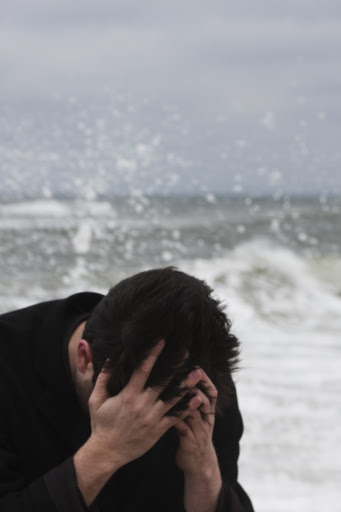
David Horvitz discussion of his photo project “Sad Depressed People” and “Mood Disorder” has me questioning my own.
Horvitz staged a portrait of himself enacting a state of depression. When posted on Wikipedia it went viral and has been used hundreds of times to represent this sad state of being. He is tracking how an image disseminates across the Internet. After collecting the many uses he published his findings as an artist book.
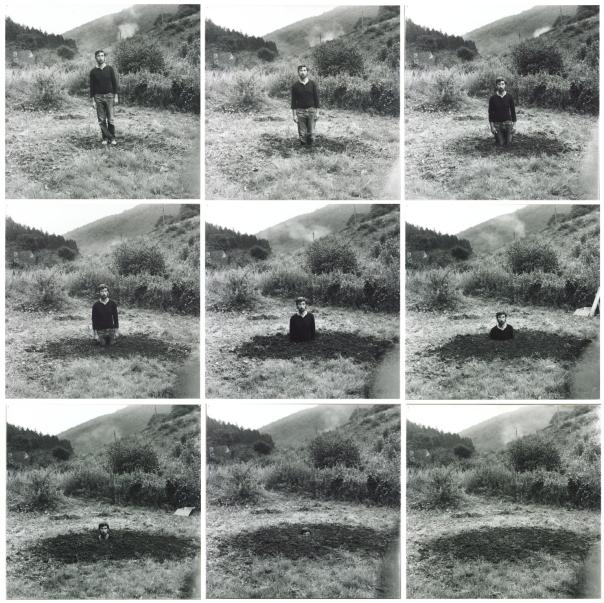
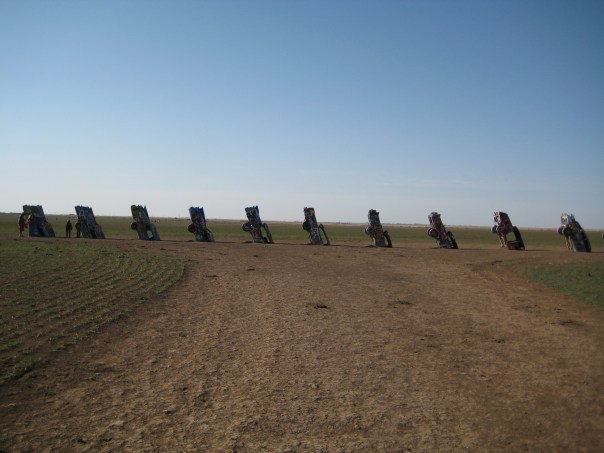
There are several other burial projects worthy of our attention. The famed Cadillac Ranch Amarillo Texas, 1974. Ten Cadillacs were buried nose first in a chronology of the development of their tail fins.
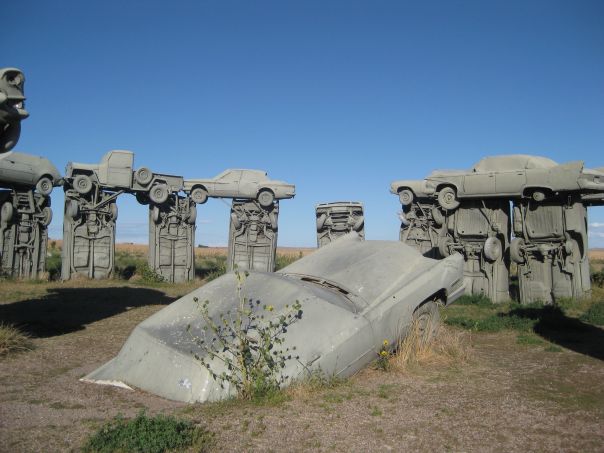
Carhendge in Alliance, Nebraska, is a replica of the monumental Stonehenge in England.
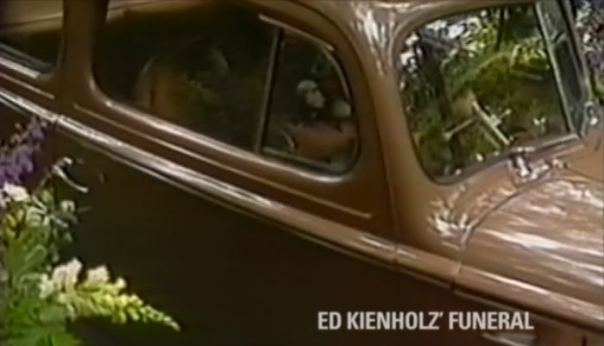
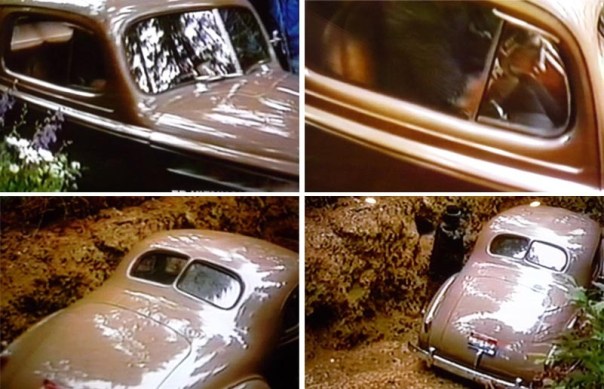
Last, but certainly not least — Edward Kienholz’s final art work in 1994 was his burial, which took place at a hunting cabin he owned on top of a mountain in Hope, Idaho. He died of a heart attack at age 65.
Robert Hughes writes: “His corpulent, embalmed body was wedged into the front seat of a brown 1940 Packard coupe. There was a dollar and a deck of cards in his pocket, a bottle of 1931 Chianti beside him, and the ashes of his dog Smash in the trunk. To the whine of bagpipes, the Packard, steered by his widow, rolled like a funeral barge into the big hole: the most Egyptian funeral ever held in the American West, a fitting [exit] for this profuse, energetic, sometimes brilliant, and sometimes hopelessly vulgar artist.”
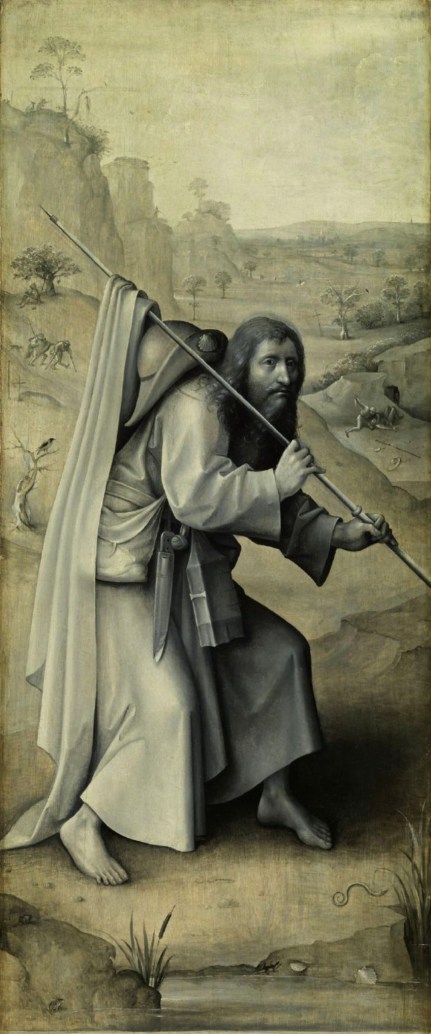
Saint James wearing a girdle book in 16th C panel by Hieronymous Bosch
Just the mere mention of a girdle makes me squirm. Makes me shudder at the thought of what I used to do to squeeze myself (no, wrestle my hips and thighs) into what was considered to be an ideal body configuration.
So when Susan Tallman, keynote speaker for the Logan Symposium on the Artist’s Book at the Legion of Honor mentioned, “Girdle Books” the only thing that came to my mind was Playtex.
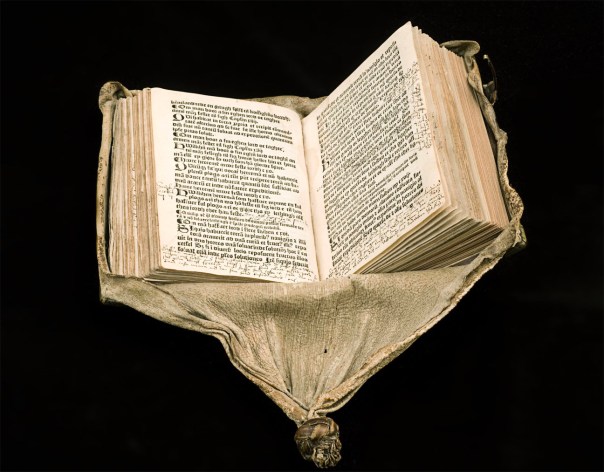
In the late Middle Ages a type of portable book evolved that we call a “girdle book,” describing how it was carried tucked into a girdle or belt. With the founding of religious orders like the Franciscans, and with the increasing interest in pilgrimages, there came a need for portable books of personal devotion such as breviaries and prayerbooks. A kind of 14th C. ask Siri pocket book compendium, a go-to place for ready reference.
These days, I propose a new kind of fashionable accoutremont: call it Siri Sack and tuck it into your girdle or belt. Or do like I do, wear a hippie-style crochet bag purse slung over the shoulder. My bag is the perfect size for sleek iPhone and is always handi. Yes, “handi” as in “have you seen my Handi?”—that’s what they call a cell phone in Germany.
Along with asking Siri fact-based questions about the weather or the price of corn futures on the commodity market, a question relevant to our study of color can add dimension, a philosphical question can evoke at timely answer or how about a joke?
Trees were recently big news, a trillion of them, at the Davos Economic Forum when Greta Thunberg lambasted Trump’s plan to just plant more trees to stave off the effects of global warming. As they swung at each other, their comments swung between outrage and optimism.
Ms. Thunberg: “We are not telling you to offset your emissions by just paying someone else to plant trees in places like Africa, while at the same time forests like the Amazon are being slaughtered at an infinitely higher rate. Planting trees is good of course, but it’s nowhere near enough of what is needed, and it cannot replace real mitigation or rewilding nature.”
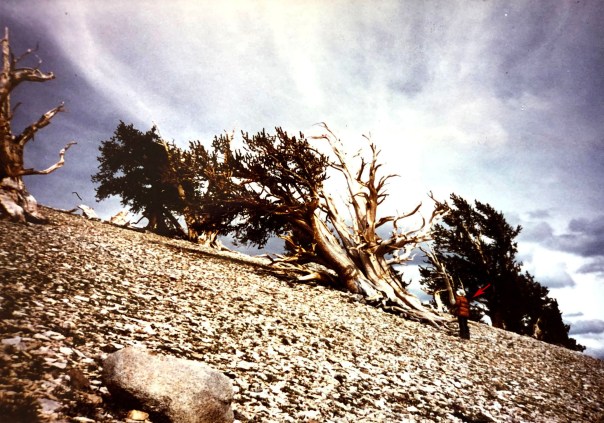
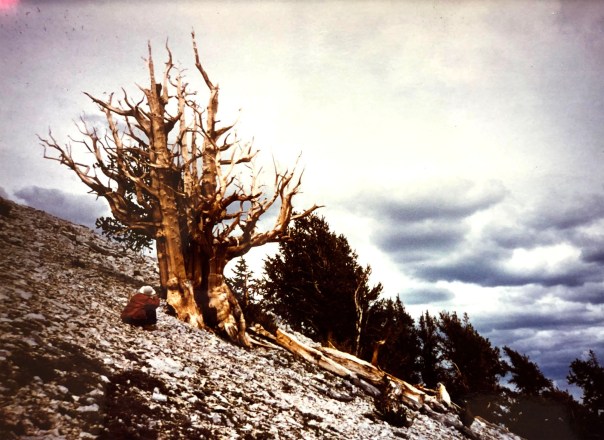
Bristlecone pines are famous for attaining a great age. Once the seedling has established itself, it grows slowly, oh so slowly, making the bark tough and resistant to rot, insects, and fungi. The oldest, Methuselah, clocks in at 4,817 years. The trees are dated using a coring device to bore in and extract a very thin sample. Then the rungs are counted to determine the years and to study the markers of extreme weather conditions. Now these trees are serving as enviromental time keepers, as chroniclers of weather and geologic events, confirming evidence of climate change.
Empires rise and empires fall and the foibles of humanity go on and on. These trees have survived catastrophes and they hopefully will survive our latest environmental folly.
For thousands of years, in the rarefied heights (10,000′) they have endured, standing strong — reaching to the awesome clarity of space and griping tenaciously to barren rocks in a testament to perseverance. Shaped by wind and snow, hardened and polished by the forces of nature, the bristlecone pines twist and dance over time with tenacity.
In 1980 I made the arduous trek to the Ancient Bristlecone Pine Forest in the White Mountains. Since then these awesome life forms have loomed large in my imagination. With sketchbook in hand I am the tiny figure with the orange parka and the white hat, (red arrow pointing).
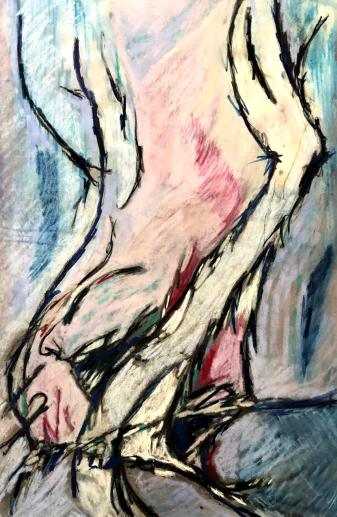
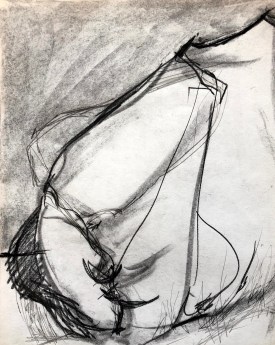
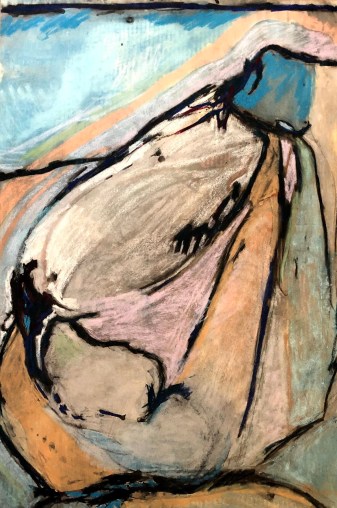
Back in my studio, from my quick plein-air 9″ x 12″ charcoal sketches, with pastel and pencil I enlarged my drawings to 24″ x 35″. Perhaps it’s my bent towards anthropomorphising their astute qualities but especially now, looking back some 40 years, I see the human figure in my forms.
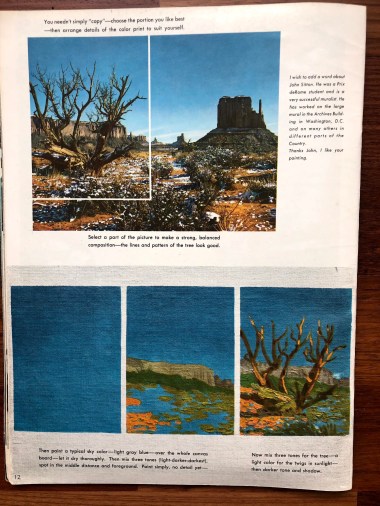
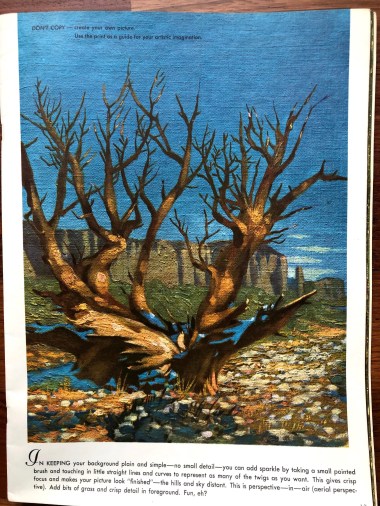
In my teens, trees were a subject. Both of my parents learned the basics of painting from the Walter Foster How-To books. His step-by-step instruction made it easy even for beginners to accomplish a detailed landscape. His lesson on the gnarly branches of the juniper tree in Monument Valley was the source for the painting that hung for years in our family den. Revisiting this now, I can see how my expressive marks, took a cue from WF.
Any discussion of trees must include W.S. Merwin — his poetry and his commitment to planting trees. The Poet Who Planted Trees .
For tenacity, we’ve now been at it as artists for a long long time. For trees, we don’t need trillions, just one or two inspiring examples.
As we draw and paint, a conversation ensues. Our marks on paper, on canvas are our responses to the voices, the tastes, and the touches we experience. By making marks, we create ourselves a tiny bit more – and we can actually see more and feel more, because we have, in that tiny bit, become more.
As we pass on through to the new year (20/20) and a new decade (the roaring 20’s) we are reminded of age-old doomsday projections and apocalyptic prophesies. During my years on this planet, I have lived through my share of great dangers:
1969 The Last Days
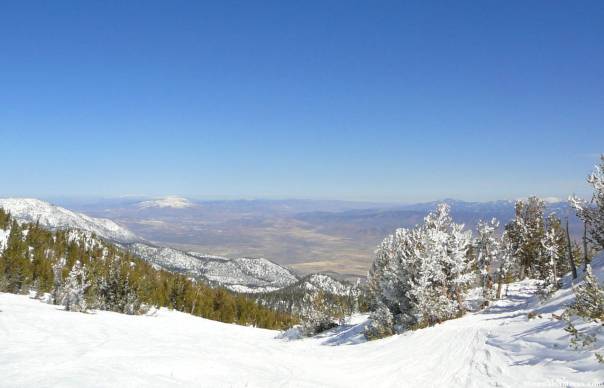
In winter, every Saturday at 5 AM a bus left the parking lot of my Sacramento high school school filled with rambunctious teenagers primed for a day trip to the Sierras for downhill skiing adventures on the powdery slopes at Sugar Bowl, Squaw or Heavenly Valley.
In the fall of 1967, cable was strung for two new chair lifts to bridge the slopes of California and Nevada then in 1968, Boulder and Dipper chairs started running, turning Heavenly Valley into America’s largest ski paradise.
Although there was always an anticipation of the “big one” The Last Days of the Late, Great State of California published in 1968, stoked the fear. In Curt Gentry’s novel the state suffers a Richter 9 magnitude earthquake and the populous coastal regions west of the San Andreas Fault sink into the Pacific Ocean.
Psychic Edgar Cayce tied prophecies of earthquakes and volcanic blasts to the Bible, “These changes in the Earth will come to pass, for the ‘time and times and half times’ are at an end, and there begin the periods of readjustments.” Cayce saw that these “birth pains” as higher consciousness and soul growth and that life on Earth would ultimately prevail. AMEN!!!
Whipped up by predictions of imminent seismic catastrophe, on the day forecast as THE day, with a group of hearty friends, I took the ski lift to the top of Heavenly mountain so that we could, at the appointed hour, witness the shake then slide of California into the sea. We would take our stand on the edge then jump back just across the state line into Nevada and be saved from destruction.
High on the mountain top, huddled together against the blistering wind, we waited, waited for the groan and quake. 3:15…3:20… 3:30… The time was ticking by. No show. By dusk we realized we better head back or we might not ever find our way back down the mountain and that would be the real catastrophe.
1987 Harmonic Convergence
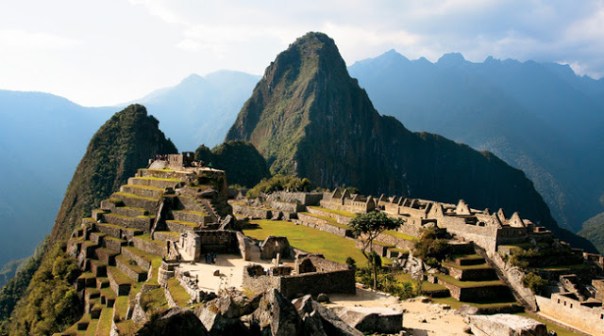
On August 24, 1987 it was by happenstance that I had just completed hiking the Inca Trail arriving at Machu Picchu the morning of the Harmonic Convergence. The trip was not timed in hopes of joining with the HC believers. On the contrary, the night before we had camped at the Sun Gate (Inti Punku) so that we could descend into the sanctuary arriving at the sacred sun stone before the tourist buses arrived. Expecting a crowd of other intrepid HC hikers congregating to witness the great shift in the earths’ energy, helping to facilitate the coming New Age of world peace, to our amazement at sunrise there was nobody there. Nobody! So we celebrated our good fortune, rambling the grounds without hordes of eager tourists with cameras shutters clicking or the humming, chanting, drone of dancing and hugging convergers. The earth didn’t make a monumental shift that day, but I certainly did. It might have been the altitude or maybe it was just the thrill (and exhaustion) at having arrived after the arduous terrain of the trail, either way I felt harmonically realigned, resonantly attuned and converged.
1999 Y2K
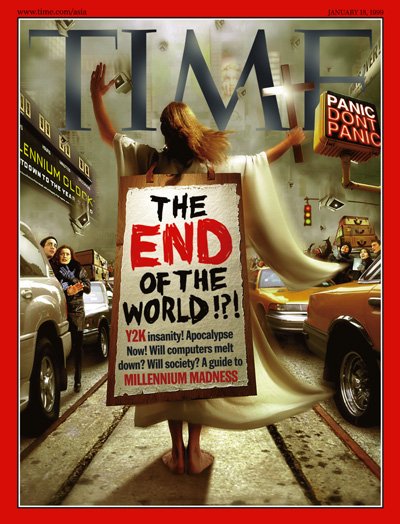
Y2K IS shorthand term for “the year 2000” commonly used to refer to a widespread computer programming shortcut that was expected to cause extensive havoc as the year changed from 1999 to 2000. Instead of allowing four digits for the year, many computer programs only allowed two digits (e.g., 99 instead of 1999). At midnight of 1999 we watched our computers screens waiting for catastrophe. 12:15…12:20… 12:30… The time was ticking by. No show. Our fears were for naught so we sent celebratory e-mails dated January 1, 2000 announcing: we made it through!!!
2012 Super Bato Saves the World
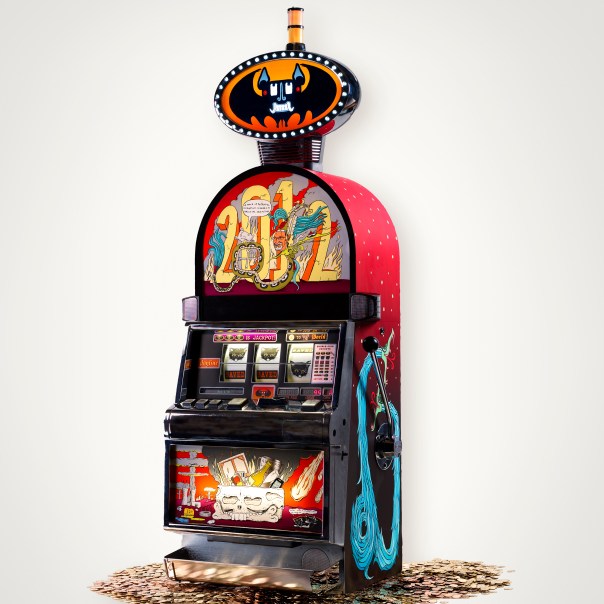
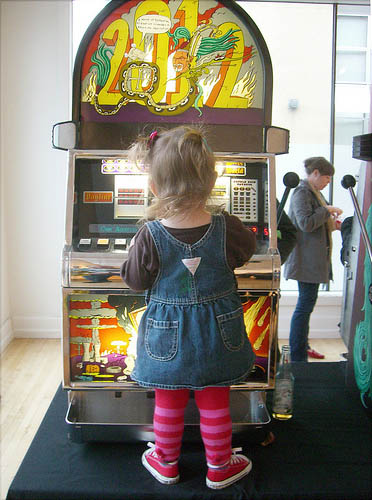
In 2012 Electric Works with Enrique Chagoya published Super-Bato Saves the World an edition of slot machines featuring talking skulls, cataclysmic fireballs and even the likeness of Chagoya with a serpentine body. Replete with graphics that spoke about discontent, environmental catastrophe and the end of the world. To appease the State Gaming Regulators, Chagoya even designed coins for use in the machines with “2012” stamped on them along with the motto: “Life is a dream, then you wake up.”
December 21, 2012 was regarded as the end-year of a 5,125-year-long cycle in the Mayan Calendar. Various astronomical alignments and numerological formulae were proposed for this date and New-Agers held that it would be the start of a period during which Earth and its inhabitants would undergo a physical and spiritual transformation which would incur both destruction and new growth. As part of the fun, we said, “if the super jackpot is won, the world would be saved.”
At the opening reception, we knew we were saved when a little girl pulled the lever and won the jackpot. NO fire and brimstone destruction, no Armageddon, lots of bells and whistles went off and a shower of coinage. Super Bato had saved the world—just look around. It was going to be a glorious kingdom come.
Crisis averted!
20/20 and Onward:
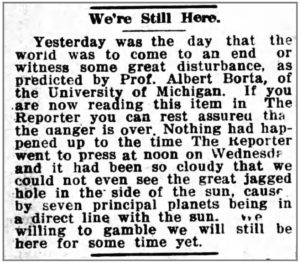
12//19/19 headline from The Leon Journal Reporter, Iowa
There are long lists of failed projections; of bad things that did not materialize. Some of the highlights include Professor Portia’s Predictions:
These days fear-mongering continues to be the weapon of choice.It can immobilize and can strike us into submission. Do not heed the politicians and the pundits call.
The descent into darkness has passed once again and the light is coming back like it has done over and over again, for 4.5 billion of years. The planet continues spinning on its merry way.
Just find your spot and get on with it — doing the important work that you were put here for — to love one another and do unto others and to the planet as you would do to yourself.
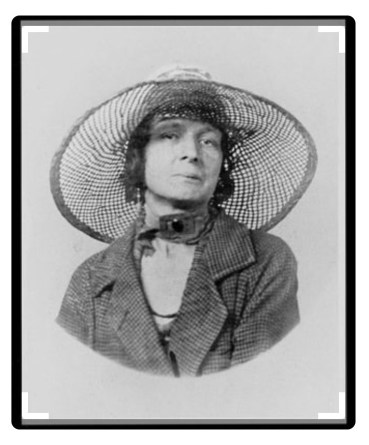
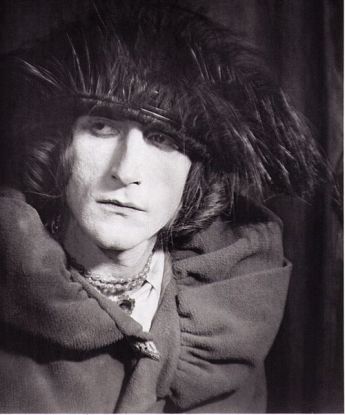
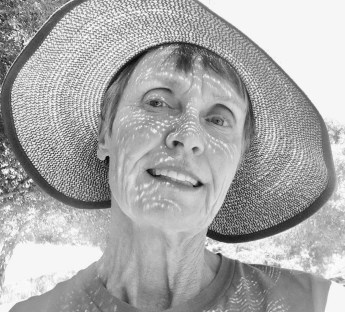
Take a long look at these two photographs. Notice anything?
The one on the top is of Baroness Elsa Freytag-Loringhoven. The one on the bottom is of Rrose Sélavy AKA Marcel Duchamp. Both are attibuted to Man Ray circa 1920-21.
Freytag-Loringhoven admired Duchamp both artistically and perhaps romantically. One of her early performances consisted of her rubbing a newspaper article about the artist’s famous painting Nude Descending a Staircase (1912) over her naked body and then reciting a poem that ended, “Marcel, Marcel, I love you like Hell, Marcel.” While Duchamp did not return her romantic advances, he did return the admiration for her as an artist, saying, “She’s not a futurist. She is the future.” Some historians suggest that the Baroness’s persona and physical appearance inspired Duchamp to adopt his female alter-ego Rrose Selavy. Openly bisexual in the 1920s, Freytag-Loringhoven’s unapologetic sexuality and promiscuity caused much scandal, even among her avant-garde confrères, and sometimes overshadowed the art she created. — from the biography Baroness Elsa by Irene Gammel.
What do you call a day when the shoe drops? Are you still waiting for the other one?
What do you say when you discover a counter story to one you have held for so very long?
There are the days before and the days after a profound revelation. What happens when one gets to the source of a deeply entrenched narrative and find the truth is not as you thought or as you were taught?
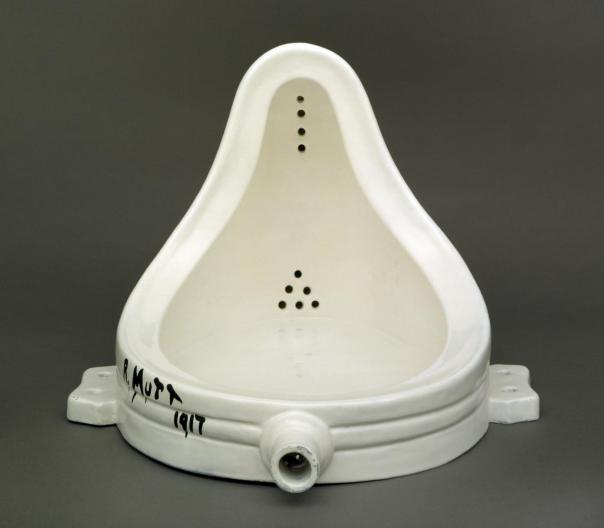
This week, my long held beliefs about Marcel Duchamp were shattered. For years I have been fascinated by his alter-ego female persona Rrose Sélavy. That was the first to go… and then that pesky R. Mutt toilet — discussion of which has graced several of our History of posts (here and here and here). That urinal was not a Duchampian instigation but was first identified as “found” by the Baroness.
It’s fraught story of love and intrigue that begs for a revision of art history. What happens when that toilet descends the staircase?
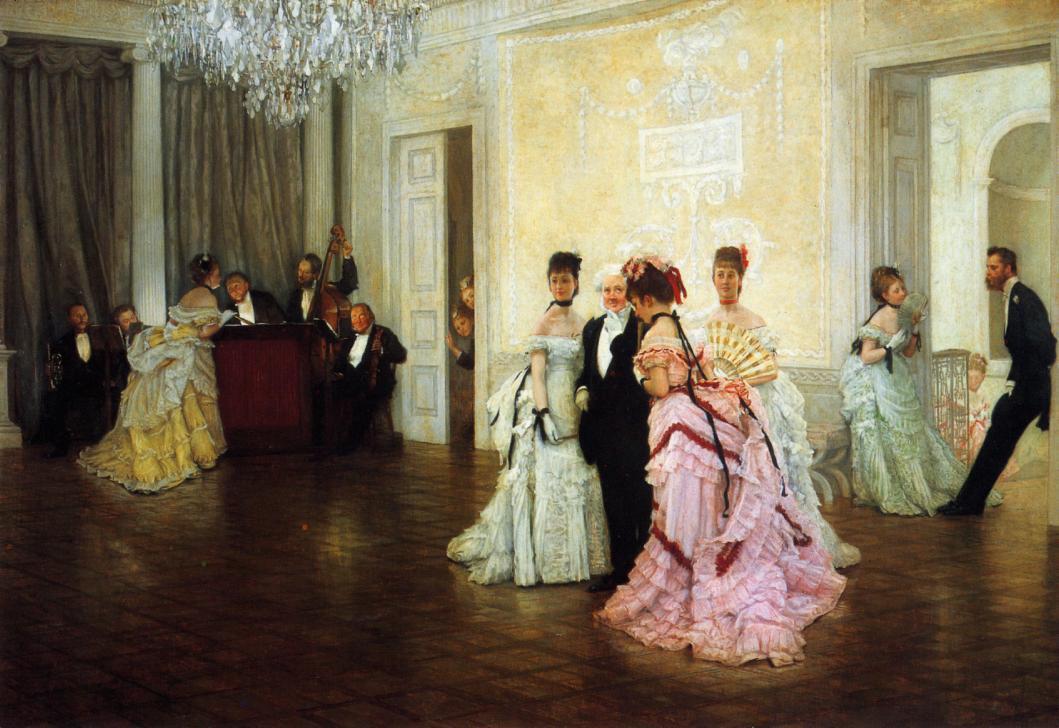
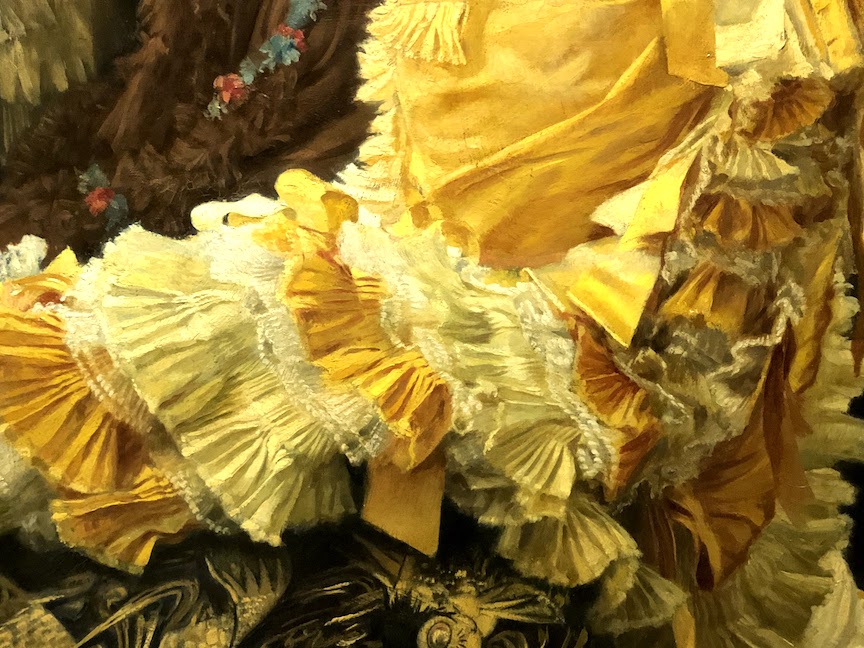
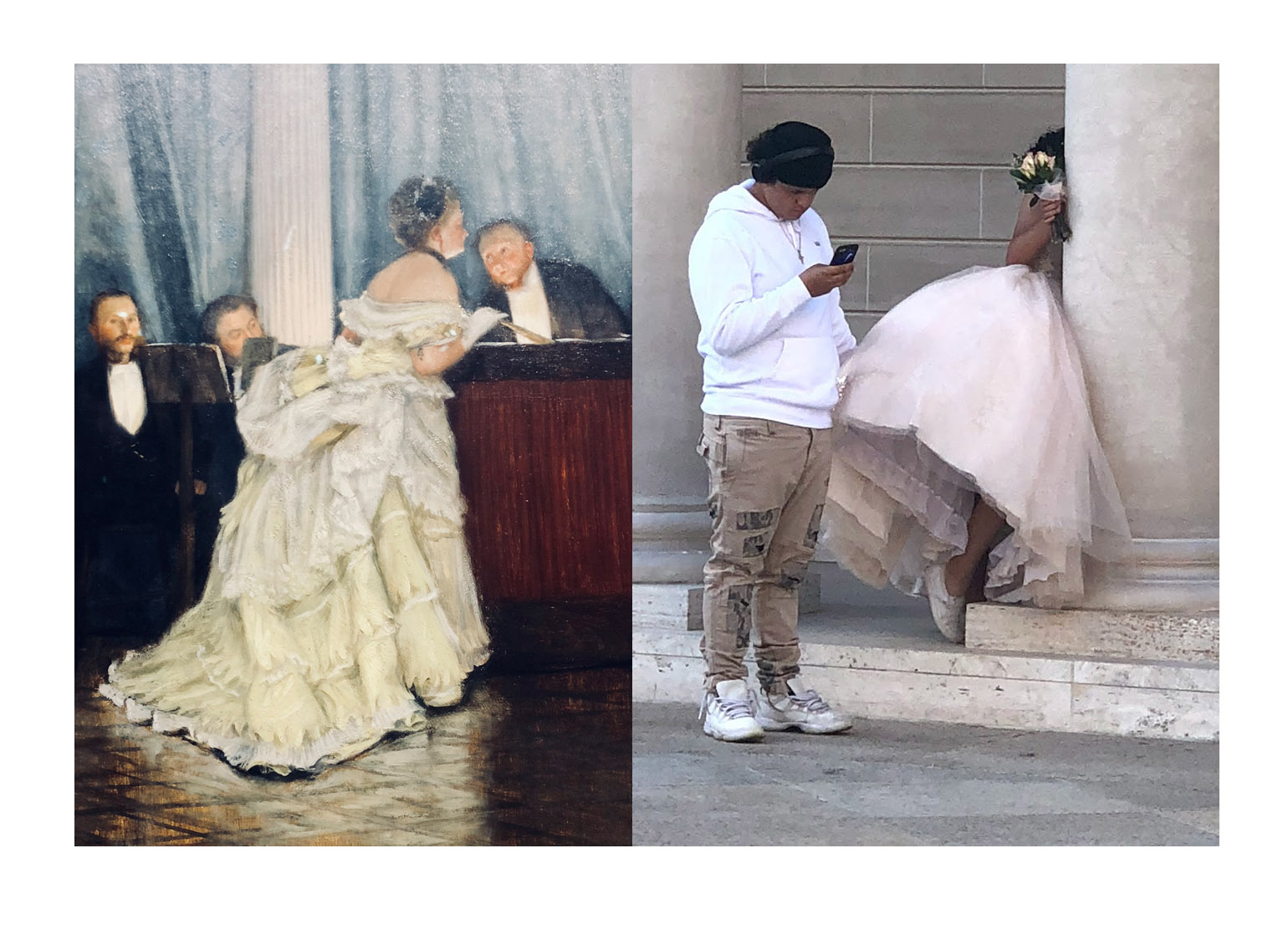
Although I do not particularly care for frou-frou (Rococo is not my fav- the exception being Fragonard’s The Swing) I was surprised at how Tissot’s flounce caught my eye. Fascinated by the swoosh of his brushwork I got caught in his virtuoso swirl. And who doesn’t love a fancy party?
After a quick dip into Fashion and Faith, we headed for the auditorium, where we met up with our colleagues and friends, many we had not seen since our retirement from our EW book publishing days. Book lovers really do come out for this event — so there were plenty of hugs and kisses all around.
The program began with Steve Woodall making the introductions, giving props to the many contributors who made the day possible. So glad that Steve directed us to the Insights online post about artists books—and so glad he gave props to our friend Radek Skrivanek (Axis Point Studio) who, in a true techno-feat, animated the turning of pages of Dlia Golosa an illustrated book of revolutionary Russian poetry.
It was a chock-a-block afternoon of presentations by a group of distinguished artists and scholars. David Singer, SFMOMA librarian, brought to our attention an amazing mix of projects that we had never heard of. We have now spent many happy hours via Google ferreting out the links. As we proceed through the Now of Now Art, we will describe several in detail. For Now, you can go the Lesson One, a revelation about 128 Details from a Picture a book by Gerhard Richter.
In a last minute sprint at 5:13 ( the museum closes at 5:15) I hot footed it to have a quick check in with my touchstone Van Gogh that I wrote about in our History of Drawing Lesson Nine last year on our way to the book symposium. It’s still there and it’s still as T.S. Eliot wrote, “at the still turning point of the turning world.”
The elegant courtyard of the Legion of Honor is a popular place to stage wedding photographs. Often between the columns there are coy brides flirting with the camera. It was our good luck, just as we were leaving, to come full-circle with the theme of the flounce.



 Back in my studio, from my quick plein-air 9″ x 12″ charcoal sketches, with pastel and pencil I enlarged my drawings to 24″ x 35″. Perhaps it’s my bent towards anthropomorphising their astute qualities but especially now, looking back some 40 years, I see the human figure in my forms.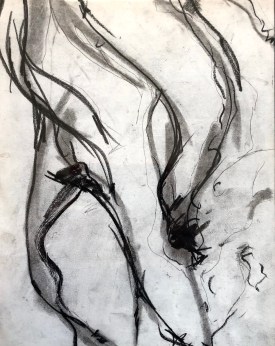




 Now of Now Art